Is Steam Machine Good?
Quick Answer
The Valve Steam Machine is a new SteamOS-powered gaming console/PC hybrid designed to bring Steam’s PC game library to the living room with capable hardware targeting 4K at 60 fps and extensive connectivity. Early impressions suggest it balances PC flexibility with console ease-of-use, though price and game compatibility will determine its broader appeal.
View Steam Machine on Steam Store
Be the first to know when it drops
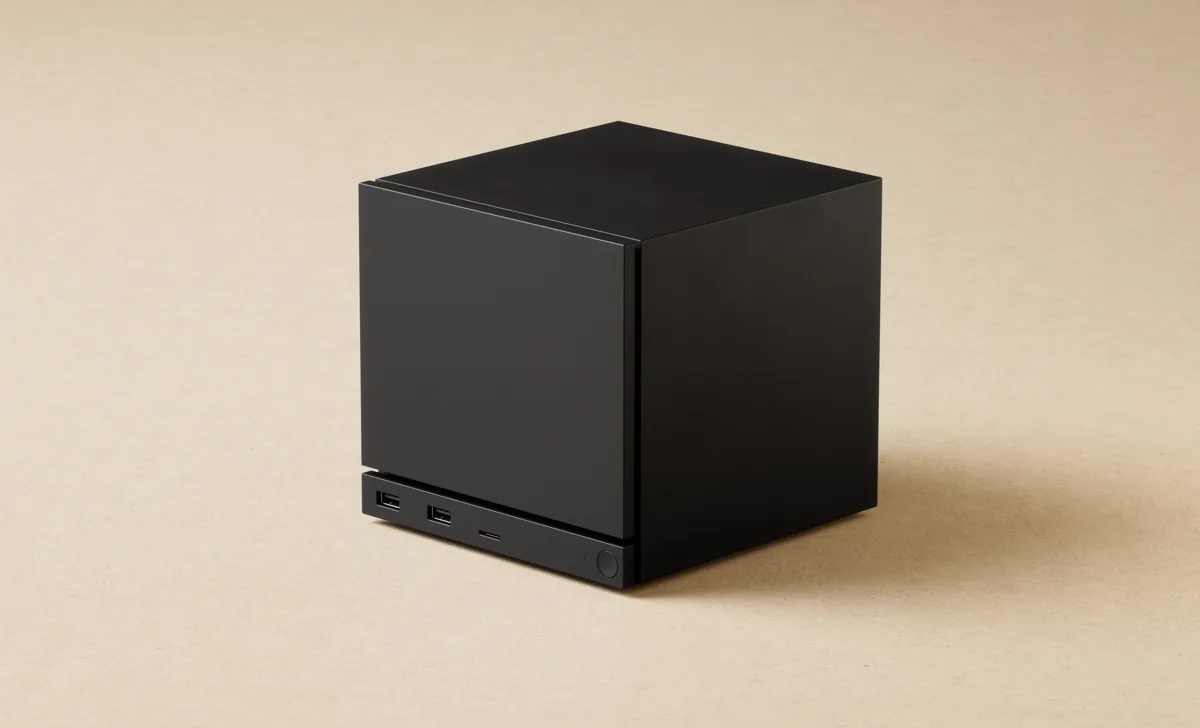
Valve’s Steam Machine returns in 2026 as a compact console-style gaming PC aiming to deliver high-performance Steam gameplay on TVs and monitors. Announced alongside a new Steam Controller and other hardware, the Steam Machine seeks to combine the depth of PC gaming with the simplicity of a console. But is it really good, and worth considering over a traditional gaming PC or established consoles? Here’s an honest review based on official specs, early hands-on info, and what’s known so far.
About Valve
Valve Corporation, best known for Steam — the largest digital distribution platform for PC games — has expanded its hardware portfolio in recent years, starting with the Steam Deck handheld gaming PC. In late 2025, Valve revealed a new iteration of the Steam Machine aimed at the living room, running SteamOS and leveraging the company’s deep integration with the Steam ecosystem. The goal is to bridge the gap between desktops and consoles by offering PC gaming power with a console-like experience.
Pros & Cons
Pros
- SteamOS ecosystem: Runs SteamOS 3 with Big Picture mode, providing streamlined access to the full Steam library.
- Compact yet capable hardware: Powered by an AMD Zen 4 CPU with 6 cores/12 threads and a semi-custom RDNA3 GPU with 28 compute units — significantly more performance than a Steam Deck.
- High-resolution target: Valve positions the Steam Machine for 4K gaming at 60 fps with support for AMD FSR upscaling, making it suitable for modern titles on TV.
- Expandable storage: Available with 512 GB or 2 TB NVMe SSD and microSD expansion for flexibility.
- Designed for living room setups: HDMI/DisplayPort support and robust connectivity make it easy to integrate with TVs and home entertainment systems.
Cons
- Price still TBD: Valve hasn’t announced official pricing, and expected cost (~$699 or more) may limit value vs consoles or DIY PCs.
- Game compatibility caveats: Some PC games — especially those with strict anti-cheat or Windows-specific dependencies — may not run optimally under Proton/SteamOS.
- Thermal/noise trade-offs: Compact PC form factors often struggle with heat and fan noise under sustained load.
- Competition from consoles: Must justify itself against mature ecosystems like PlayStation and Xbox with exclusive titles and platform-wide optimizations.
- No built-in display: Unlike handhelds, this device needs external screens — not portable by design.
View Steam Machine on Steam Store
Get ready for the next gen of gaming
Technical Deep Dive
Technically, the Steam Machine is a marvel of thermal engineering. To fit a Zen 4 CPU and a 28-CU RDNA3 GPU into a chassis smaller than a PS5 Slim, Valve utilized a dual-fan vapor chamber cooling system. Initial benchmarks suggest the RDNA3 GPU performs roughly on par with a desktop RX 7600, which is impressive for this form factor. The integration of AMD FSR 3.1 directly into the SteamOS compositor means that even demanding titles like 'Cyberpunk 2077' can maintain high frame rates at 4K. Furthermore, the inclusion of Wi-Fi 6E ensures that Steam Remote Play and game downloads are as fast as possible, reducing the friction usually associated with living room PC setups.
Valve vs PlayStation 5
Compared to the PlayStation 5, the Steam Machine offers broader access to the Steam PC game library and greater customization thanks to PC-centric architecture. PS5 provides tightly optimized exclusives and developer support that SteamOS titles sometimes lack, but Steam Machine’s versatility and backward compatibility can be more appealing for PC gamers. Ultimately, if you value a vast existing library and PC flexibility, Steam Machine may be preferable; if you prioritize exclusive games and consistent performance without tinkering, PS5 remains compelling.
Product Specifications
Price Range
TBD (estimated competitive with current gen consoles)
Who is this for?
The Steam Machine (2026) is designed for two main audiences: PC gamers who want to enjoy their existing library on a 4K TV without the bulk of a desktop tower, and console gamers who are tired of paying for online subscriptions and want the freedom of an open ecosystem. It's particularly appealing for those who already own a Steam Deck and want a more powerful 'home base' for the same games.
Final Verdict
So, is the Steam Machine good? Based on announced specs and early impressions, it presents a strong option for gamers who want Steam’s PC experience in the living room without building a custom rig. Its hardware is competitive with current gen consoles, and SteamOS’s maturity — combined with Proton’s compatibility layer — unlocks vast game support. The true determination of its value will center on the final price, game compatibility, and how it performs across a wide range of titles. For PC gamers seeking ‘console-style’ ease with Steam integration, Steam Machine is a promising contender in 2026.
Frequently Asked Questions
View Steam Machine on Steam Store
The future of gaming is coming